GAGGIN1904-001 - ethnographic attestation
Bandjin Tikovina: Kohin’s flying war-charm
Australia - Hinchinbrook Island and the Herbert River mouth, north Queensland
Sacred / spirit
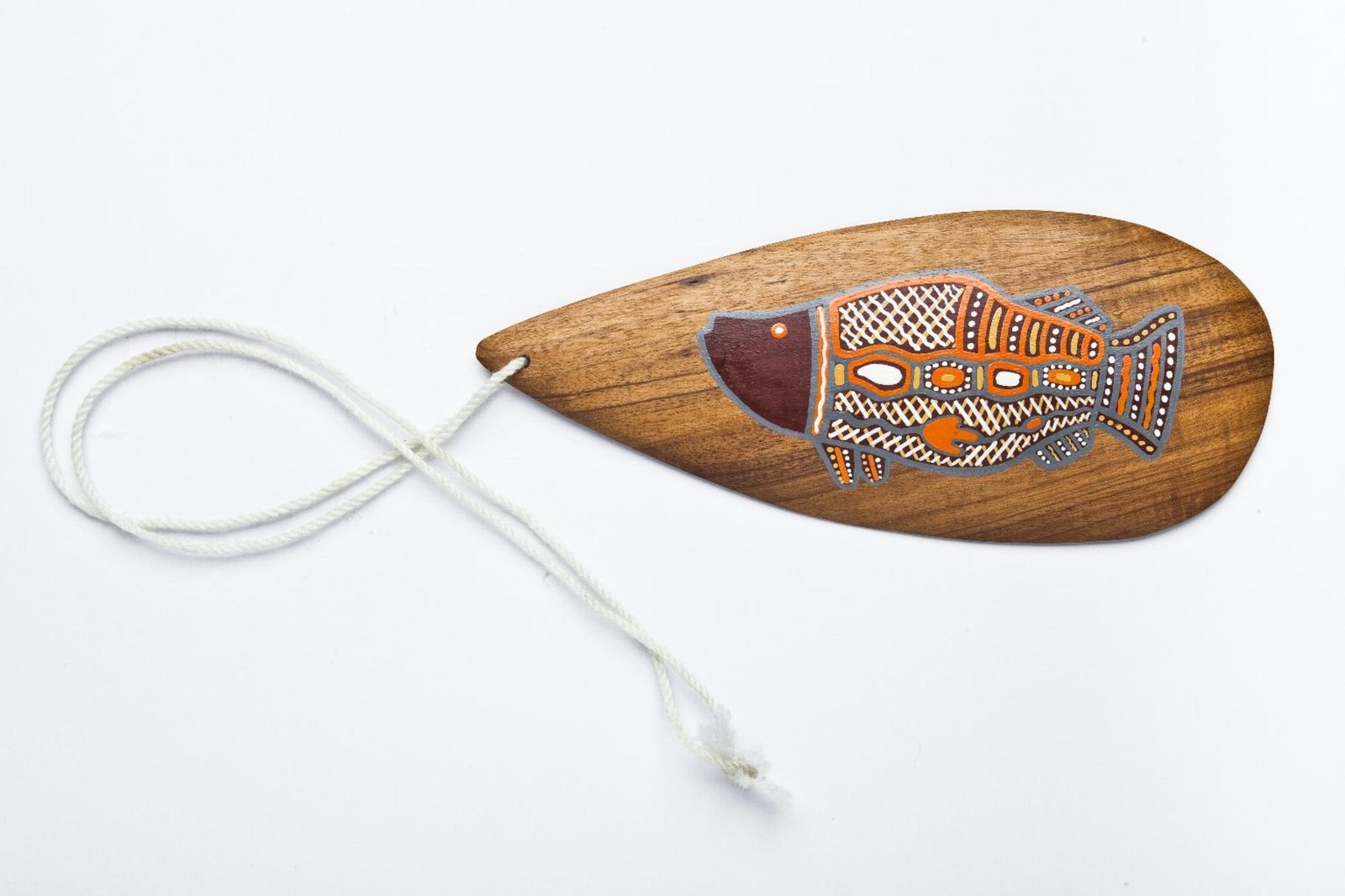
Tikovina
Tikovina -- the Herbert River (Bandjin-area) term for this carved wooden war-charm (Howitt 1904:499); the people-name "Bandjin" itself derives from Tindale's /baɲdjin/, "sea water" (AUSTLANG Y130, Biyay/Biyaygiri).
At night Kohin left the Milky Way and crossed Bandjin country as a gigantic, invisible warrior. He sent thunder and lightning, punished wrongful marriages, broken mourning taboos and forbidden food, and first appeared to the ancestors as a carpet-snake. Kohin gave them two Tikovinas: carved and painted fig-tree war-charms, worn down a warrior's back and hidden from women and children. Good men who wore them, he promised, would survive battle and fly. Two men tested the gift, gliding from tree to tree, then mountain to mountain, before travelling toward the Milky Way itself.
Kohin came long ago down from Kuling, and appeared to their fathers as a carpet-snake. He said that where he came from was a good land and in it a vast river full of splendid fish. He had two Tikovinas with him, which he presented to the tribe, and told them that if they were good men and wore them, they would not be killed in fight, and that they could fly.
Howitt 1904:498 (The Native Tribes of South-East Australia)
- Object
- A flat, thin plank of soft wood cut from a north Queensland fig-tree, about a foot long by three or four inches wide, tapering to a point at the base, its top carved into a rough human face with mouth and eyes; painted all over the front red and black with human blood and clay, and worn on a cord round a warrior's neck, hanging down between his shoulders behind.
- Function
- A war-charm believed to protect its wearer from being killed in a fight and, in the founding myth, to grant the power of flight; kept hidden away from women and children. Tied to the myth of Kohin, a sky-dwelling being who first appeared to the tribe's ancestors as a carpet-snake and gave them two Tikovinas.
- Source
- A. W. Howitt, The Native Tribes of South-East Australia, Macmillan, 1904, pp. 498-500 and Fig. 28 ("Tikovina used by the Herbert River tribes"); the identification rests on Howitt's own footnote and correspondent list, not on the manuscript itself; The Howitt and Fison Archive (howittandfison.org) was searched 2026-08-02 and has no "Gaggin" person page and…
- Source location
Page references
pp. 498-500; Fig. 28
- Source confidence
- low Representative point for Hinchinbrook Island / Lucinda Point, the place named in the AIATSIS catalogue entry for Gaggin's letter (Bandjin/Bungin country); Howitt's published passage itself locates the belief more broadly among "the Herbert River tribes," so this is a regional anchor, not a precise site.
- Snake-linked
- Forbidden to women
- Weather magic