No. SPENCER1914-002
Jangman (Yungman) Purdagiair bullroarer
Australia · Elsey · Roper River headwaters (Jangman country)
Sacred / spirit
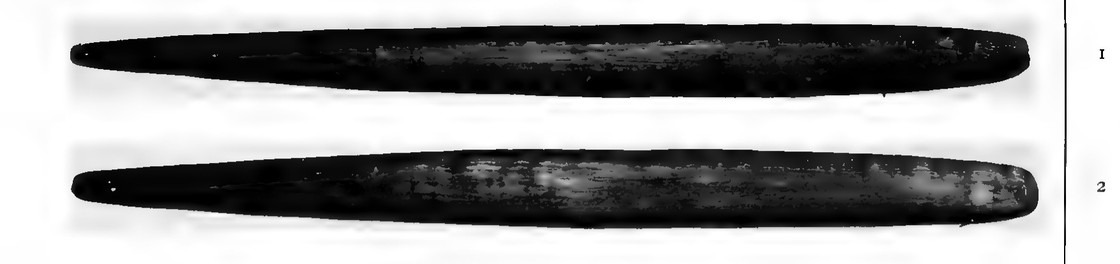
Purdagiair
Purdagiair: the Yungman (Jangman) word for the bullroarer.
At Opobinga, near the old Elsey Station, a Nanung — a sugar-bag, or honeycomb, man — arose in the far-off times and never wandered from his camp. His spirit children still live in the trees and stones around it, coming out to enter the right women and be born; the Yungman held that each spirit came back alternately as boy and girl with every rebirth. The ancestor also kept many bull-roarers, which the Yungman — today's Jangman of the Elsey country — call Purdagiair.
In the Yungman tribe there is precisely the same belief in regard to the origin of children as in the Mungarai.
Spencer, Native Tribes of the Northern Territory of Australia (1914), p. 267
Particulars
- Object
- Many bull-roarers kept by the honeycomb ancestor at Opobinga; their form is not described.
- Function
- Belonged to the Nanung (sugar-bag, honeycomb) ancestor at Opobinga in the origin-of-children tradition; no human ceremony or use recorded.
Source
Baldwin Spencer, Native Tribes of the Northern Territory of Australia (London: Macmillan, 1914), p. 267 and glossary, s.v. Purdagiair