Atlas Essay —
The Ghosts Came Down From the Hills
Northern California’s ghost initiation, bullroarer and all, was the oldest cult in the Americas, carried in by the first people to arrive
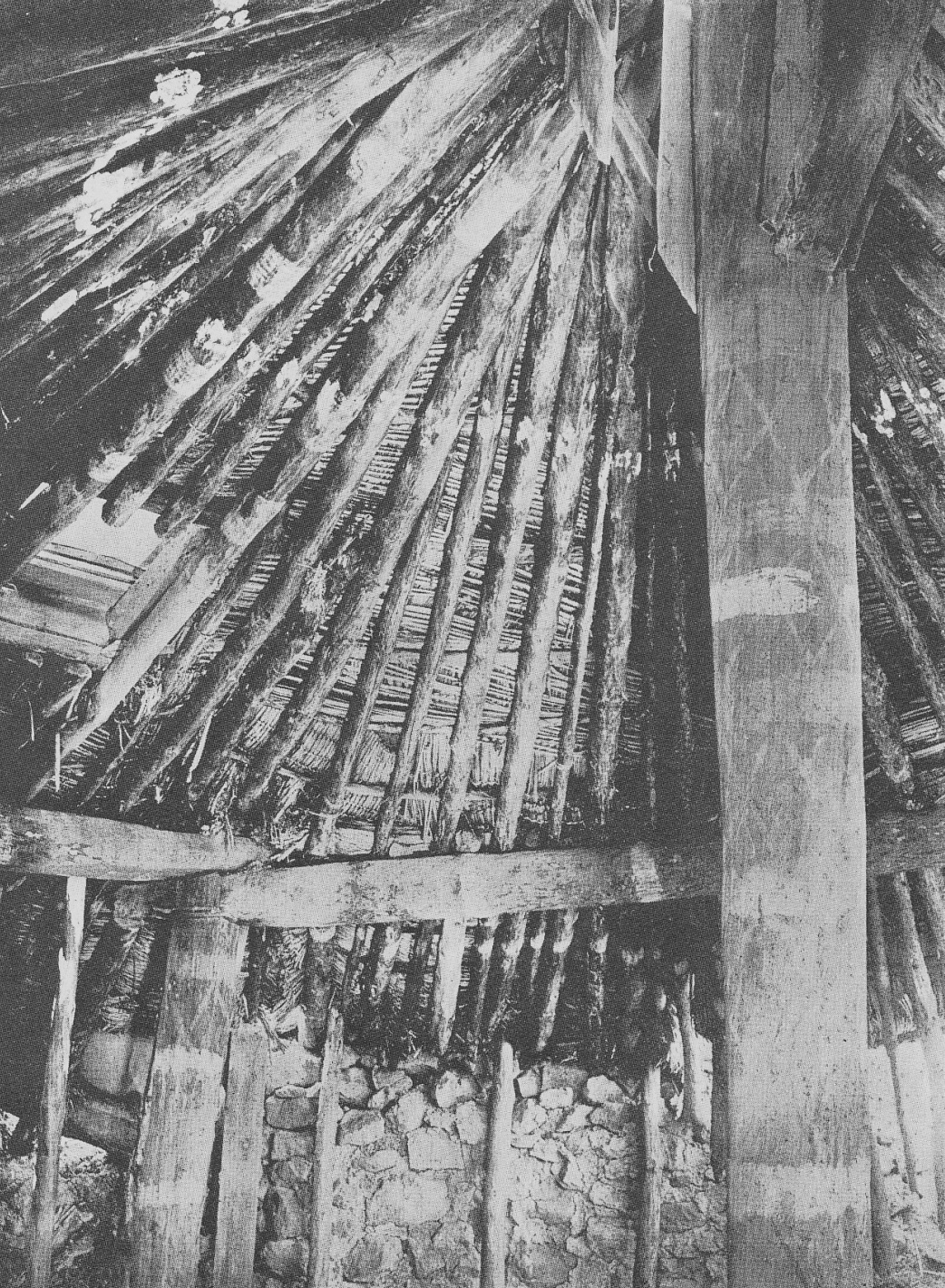
Every night of the winter school, the chief of the Kato climbed onto the roof of the dance house and called to the hills of northern California. Four ghosts whistled back. He kept calling, “haiyancin, haiyancin,” come over here, come over here, until the ghosts “set up a mighty halloo and rushed down from the hills,” painted red, yellow and black. Inside, the boys of the tribe lay in a row by the fire under straw. They had been there since the autumn on a little water and a little acorn soup, and they had grown so weak that they were “like dead people.” The ghosts took them up one at a time and danced with them. Then the bullroarers sounded, and in the houses of the village the women heard the voices of the ghosts. Edwin Loeb, who took down these schools from the last men who had been through them, judged it the oldest cult in California and believed the first Americans had carried it in with them.
The ghost initiation of north-central California is the oldest cult in the Americas. Its four parts, the secret roar, the dead come back in person, the boy killed and brought to life, and the mark he keeps, travel together through Australia, New Guinea, Africa and South America, and the first Americans brought them into the New World as one rite.
In brief
- The Kato said the dead lived in the mountains as the living did. In their winter school the dead came down to the boys every night, and the women took the roar for the ghosts’ voices.
- At Clear Lake, in the same hills, the Eastern Pomo ghosts hunted the boys as “little squirrels” and tossed them round the fire, which they called “eating a squirrel.” On the last night a man playing the dead lay as a corpse for the mourners, then sat up.
- Huchnom boys left their winter school through the smoke hole, painted in the ghosts’ own stripes, their mouths stuffed with straw until they were “very nearly strangled,” and their mothers caught them below.
- The Long Valley Patwin rite held all four parts at once: ghosts from the hills, Thunder’s bullroarers, boys killed and brought “back to life,” and flint scratches kept as tokens of their death.
- To the Pomo the roar was Thunder’s voice and the voice of the dead at once. In south-eastern Australia it was thunder and the god of the initiation.
- Loeb found the same four parts together in initiations across Australia, New Guinea, Melanesia, Africa and South America, and held that nothing in the human mind would bind them: they had spread as one complex.

The dead live in the mountains
The Kato lived at the head of the South Fork of the Eel River, in Mendocino County. Their word for dying was yite celsuk, “wind drop-out,” and they knew where the dead went:
“People after death became tai’i (those outside) or ghosts. The ghosts lived in the mountains. They slept in the daytime and worked at night. The tai’i gathered food, had children, and lived as the Indians lived. They had a dance house under the ground.”
Edwin M. Loeb, The Western Kuksu Cult (1932), p. 14.
Those were the visitors. The four ghosts of the boys’ school were tai kehan, “outside people,” the dead who kept their own dance house in the hills. “Among the Kato all boys about the age of twelve were put in the dance house, and kept there all winter” (p. 26). Every male of the tribe went through it, and no female. A father led his son in and went home, and from then on his only part was to bring food. The boys lay blackened on the right-hand side of the fire, covered with straw. For four days they had no water, then a little, with a little acorn soup and pinole. “In the course of the six months they became very weak, ‘like dead people.’ The chief had to turn the row of boys over every morning” (p. 26).
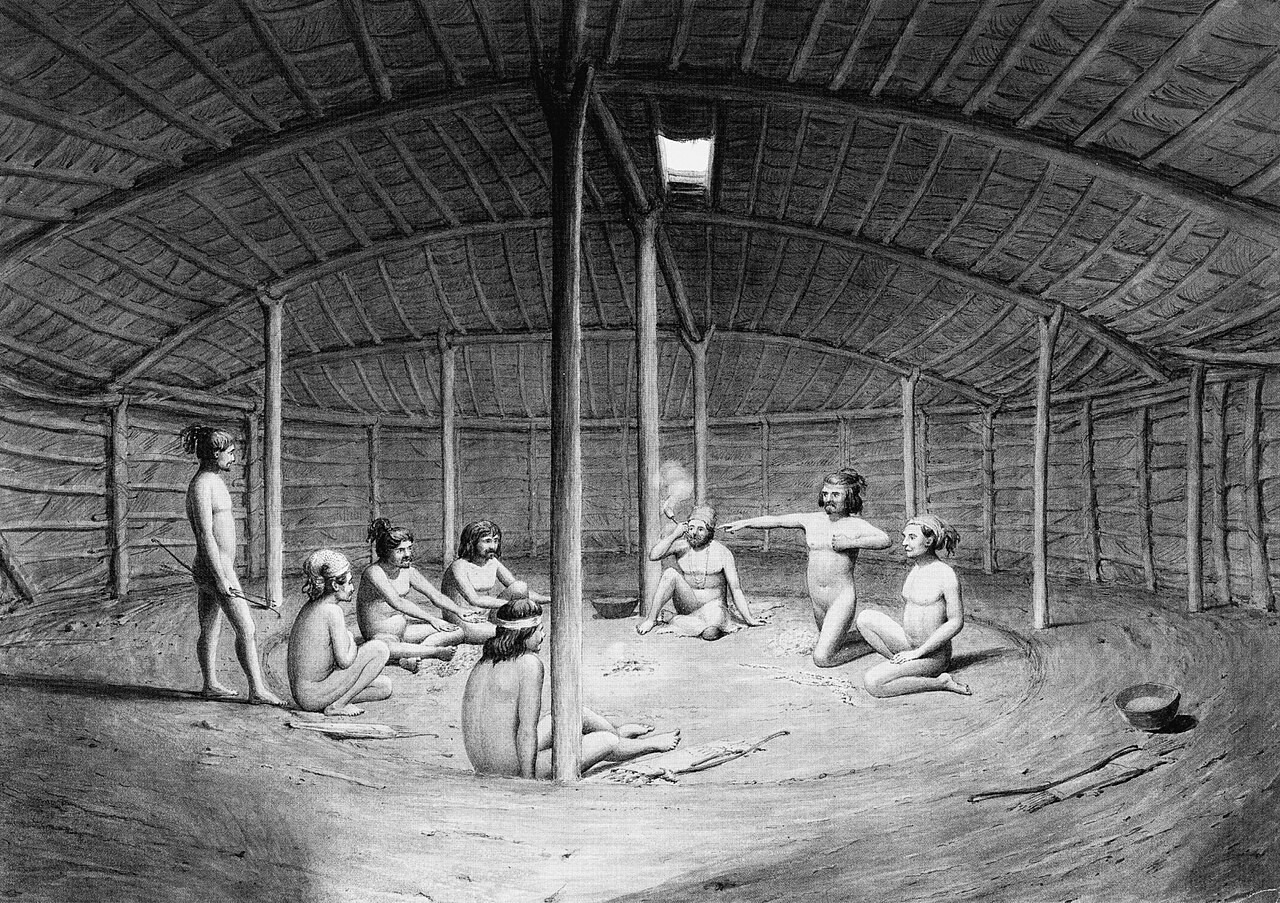
Each night two clowns played in the dance house first, and a boy who laughed at them might fall sick. Then the chief went up to the roof and called, the ghosts ran down, and a man at the door lifted each one inside. They danced four times round the centre post one way and four times the other, and took up the boys to dance with them. Then came the voice:
After the ghosts had entered, the bullroarers were sounded. The women at home believed that the bullroarers were the voices of the ghosts.Loeb, The Western Kuksu Cult (1932), p. 27
At last the ghosts laid the boys back on their beds and sang good-luck songs over them, “in order to keep dangers and sickness away from the youths,” and at midnight they went back up the hills (p. 27). In the mornings the chief taught: be good to your families, tell no lies, keep away from girls, and if “the big snake or the poisonous mountains” made you sick, send for Nagaitco, the Great Traveler of the Kato creation story, who “stayed with the tai’i in the mountains” (pp. 14, 27). In May someone brought in spring wild flowers “to show the boys that spring had arrived and that their trials were at an end” (pp. 27–28).
Three of the four parts stand in this one dance house. The roar is a secret kept from the women, and it belongs to the dead. The dead come in person, down from the hills where they live. And the boys lie a whole winter as corpses and rise in the spring. The Kato gave no mark in the boys’ school (p. 28). Their neighbours supplied it.
Eating a squirrel
Fifty miles to the south-east, the Eastern Pomo lived round Clear Lake. In his first book on the Pomo, Loeb opened his account of their religion with a ranking: “The ghost ceremony was unquestionably of very great antiquity while the Kuksu cult was of comparatively recent development” (Loeb 1926, p. 338). Kuksu was a doctor god from the south, and his cult belonged to California alone. The ghosts were older.
Each village in turn built a ghost house, about once in seven years, some months after the death of someone important (p. 342). The ghosts came in from the woods “in terrifying disguises and with great show of burning pitch” (p. 343). They painted every bare inch with white clay and black and red stripes, hid their faces behind fringes of twigs, and carried baskets of lit pitch on their heads or split sticks of it in their teeth, “so that fire would stream from the dancers as they ran” (pp. 346–347). They behaved as the dead behave:
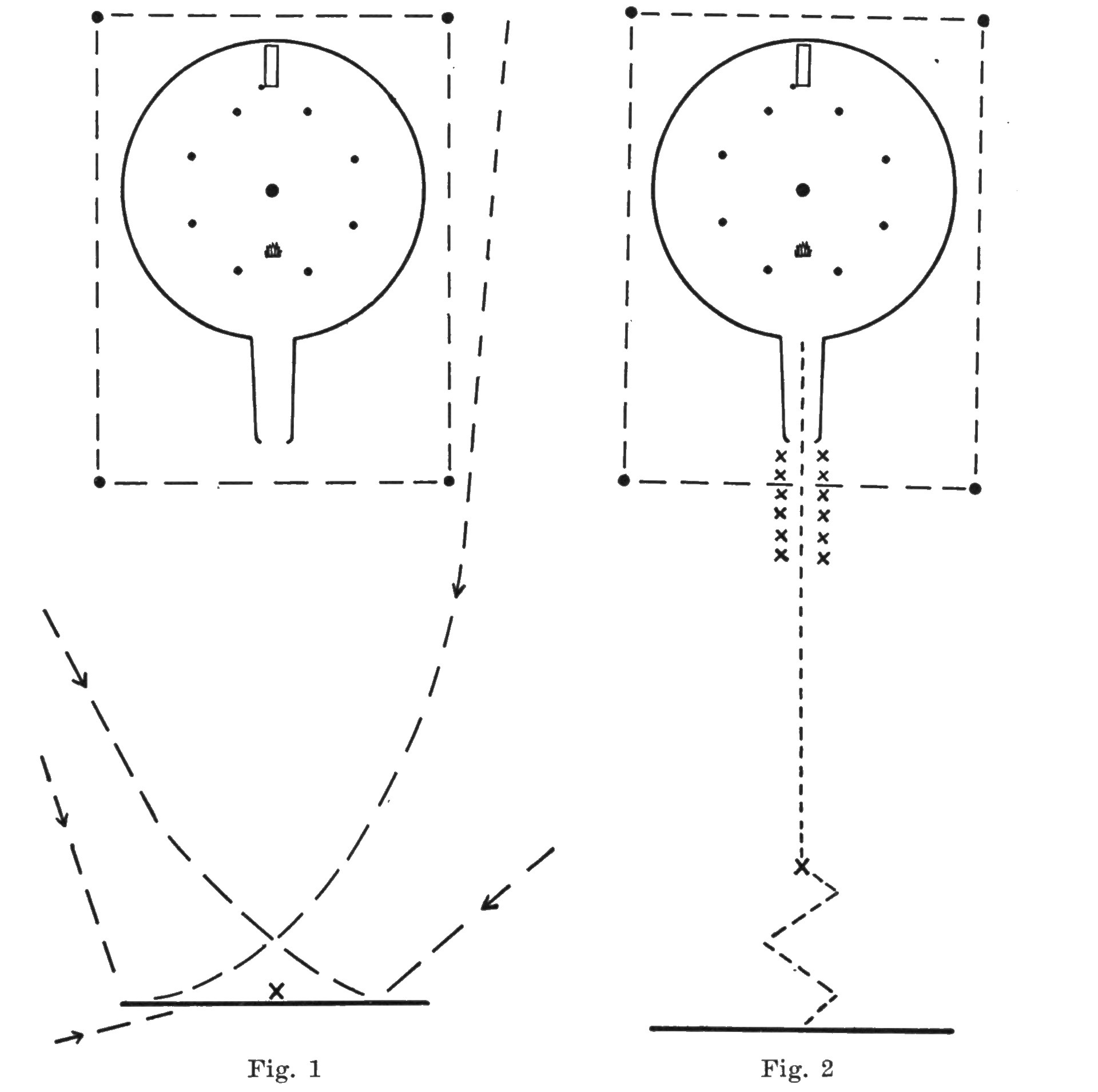
“The ghost dancers came in from various directions at a signal, all meeting at a spot some hundred and fifty yards in front of the dance house, where they went through various antics. When all were assembled, the one who was first to arrive took the lead, running away from the dance house and then advancing toward it four times. The men all came out to meet him, forming in two lines to mark his path, clapping and calling ‘Ho-o!’ as he went by them. The ghost dancer passed between these lines and walking backward, entered the dance house. He called to the yomta, asking him the way, as he felt about with one foot.”
Loeb, Pomo Folkways (1926), p. 347.
Samuel Barrett read the groping and the reversed directions the same way: they “typify the conduct of the spirits of the departed, who find everything strange when they return to the realm of mortals” (Barrett 1917, p. 412).
Inside, the ash ghosts ran the night. They spoke backwards, saying the opposite of what they meant, “a sign that these were not human beings but spirits” (p. 343). The live coals they ate were “potatoes,” and the boys they had come for were mul, “little squirrels” (p. 344). The head ash ghost hunted them with a crane-headed staff held like a bow:
“The hunters tossed the boy from one to another without allowing him to touch the ground. The boy in this manner was hurled around the fire and back to the center post … The ash ghost called this treatment ‘eating a squirrel.’ While the boy was being tossed around, the firetender pretended to burn him with his stick. If the boy was considered ‘mean’ the firetender might take a burning coal and place it in the boy’s hand, closing the hand over the coal.”
Loeb, Pomo Folkways (1926), p. 346.
Jim Pumpkin was five or six when his father, himself a ghost, took him in. “As soon as I came in the door the ash ghosts caught hold of me. They shouted ‘muli, muli, muli!’ I shut my eyes.” One held out a burning coal and told him to touch the ghost’s hand; he did, “burnt it, and started in to cry.” For four days he lay with his head covered. “I saw the ash ghosts dancing and taking out coals from the fire and swallowing them. Every morning a new group of ghosts ran down from the hills” (p. 352).
On the last night the dead came home. Among the Northern Pomo, the next people to the north, a man of the same height and build as the one who had died was bundled in rabbit skins and masked with twigs and charcoal, and he was called djakalal eldjin, “dead-body come-back.” He came in silently with the fire burning low, and lay down flat by the centre pole:
“The women relatives of the deceased entered the ghost house in single file, crying, dancing their mournful rites, and tearing their faces and breasts. The mourners approached the body, being careful to keep three or four feet away. They stayed some time around the living corpse singing and dancing in unison. Then they retreated as they had come, the rafters resounding with their doleful ululations. When the corpse was once more alone, it sat up.”
Loeb, Pomo Folkways (1926), p. 348.
At Clear Lake, where no woman ever entered the ghost house, the living corpse lay outside it, with burning sticks tied to his body to keep the mourners back, and they paid him by casting beads over his coverings. Then he went in, and sent word that he was all right and they should stop crying (p. 349).
Out through the roof
Between the Kato and the Pomo, on the Eel River, the Huchnom kept the longest school. “All of the Huchnom boys were forced to go through the ghost tribal initiation at about the age of ten years,” and it lasted all winter; Kato and Pomo boys were taken in too (Loeb 1932, p. 58). For four days the boys had neither food nor drink, and through the winter they lay on their straw beds. The chief called the ghosts down from the hills, by day or by night, and they came striped black and white, with flowers in their hair. “They carried torches and some had their hair seemingly blazing with pitch” (p. 58).
“Sometimes they carried the boys on their backs, and again they led the boys around the fire holding them by their sexual organs.” A boy known as mean was tossed over the fire, or had burning coals thrust into his hands. “The bullroarer was sacred among the Huchnom, and was twirled by the ghosts at the time of their ceremony. It was called tet nun toyol (string head tier)” (p. 59). In spring the flowers came into the dance house, as they did among the Kato, and the school ended at the roof:
“Then as a final ceremony the boys were thrown out of the smoke hole. The men who were managing the ceremony did this. The youths were painted with white clay, and striped black with coal. Balls of straw were stuffed into their mouths and ears, so that they were very nearly strangled. The mothers and aunts of the boys were stationed outside to catch their offspring, wash them and clothe them in deer or puma skins.”
Loeb, The Western Kuksu Cult (1932), p. 59.
The boys went in by the door in the autumn as children and came out by the roof in the spring, choking, striped black and white like the ghosts who had held them all winter. The women who had borne them caught them, washed them and dressed them. Then every grown man watching in the house was painted and thrown out after them, to bring good luck (p. 59).
Back to life
East of Clear Lake, in Long Valley, the Patwin traded with the Pomo of Sulphur Bank, on the lake’s eastern arm, and “boys from either place might be initiated by the adult men of the other” (Loeb 1933, p. 223). Their boys’ initiation was the kimima-yapai, the “thunder ceremony,” held in midsummer. Its director, the yomta, “had the office of bringing the boys to life after they had been ‘killed’ by kuksu” (pp. 223–224).
The ghosts came first. On the first morning the caller cried “yo yo” from the roof, the ghosts answered “pa wao” and came running down with branches over their heads, and “the women and children thought they were real ghosts (mulawin) and kept to their houses in terror.” Inside they danced with the boys and threw them over the fire. On the afternoons of the second and the last day the boys went out at the roof. The firetender tied blazing sticks to each one and tossed him up to a man above the smoke hole, who passed him down to a third man at the door (p. 224).
The mother of the victim was outside with a basket of water with which she extinguished the flames and brought her son “back to life.”Edwin M. Loeb, The Eastern Kuksu Cult (1933), p. 224
On the last night Thunder came. Eight men wore squirrel-hawk feathers and whirled bullroarers, four on each side of the fire, and “the women in their homes thought that the noise of the bullroarers was the voice of thunder-man.” Between the two thunder dances the boys died. The two kuksus stabbed them one after another in front of the women, having told them first to feign death, and their kinsmen carried the “corpses” inside, where the yomta touched them with a feather and they lived. Then the kuksus scratched the boys with flint, “hard enough to draw blood,” leaving “marks that served as tokens of the previous stabbings” (pp. 224–225).
That is Loeb’s whole list in a single rite. The dead run down from the hills. The roar sounds over the women’s houses. The boys die twice, once in fire at the roof and once stabbed by the kuksus, and twice come back. And they carry the death away cut into their skin.
Thunder and the dead
The Kato women heard ghosts. The Patwin women heard Thunder, in the same rite in which the ghosts ran down. When Jim Pumpkin was grown, his father took him up into the hills, where four men whirled bullroarers, and he “was told that it was the voice of Thunder God” (Loeb 1926, p. 352). Loeb, who knew the Pomo best, gave the roar both voices:
“The bull roarer everywhere among the Pomo was believed to be the voice of Thunder man. This belief extended to the Coast Miwok. At the same time Thunder man himself made the thunder by means other than the bull roarer. It was sometimes stated that the bull roarer was the voice of the dead, because it was used in the old ghost ceremony. It is not improbable, and I have heard it so stated, that women and children held largely to the latter opinion.”
Loeb, Pomo Folkways (1926), p. 302.
The roar was Thunder’s and it was the dead’s. Among the Eastern and Northern Pomo the bullroarers went from the ghost house into the Kuksu cult, “where it played the main part in the Thunder ceremony” (p. 342), and the women went on hearing the dead. Neither voice cancels the other. The roar comes out of the dark over a house full of boys who are lying as dead, and it is the loudest voice in the sky.
Loeb found the same doubling at the far end of the trail. “In southeastern Australia the roar of the bullroarer represents both the voice of thunder and that of a ‘High God’ who supervises initiation rites” (Loeb 1929, p. 250). And wherever the instrument served an initiation, the voice was never simply a noise: across “Australia, New Guinea, Melanesia, East Africa, and South America the bull roarer was used in tribal initiation. In all cases it was represented as the voice of a spirit, and women were forbidden the sight of the dreaded object” (Loeb 1926, p. 379).
The oldest cult
Loeb dated the cults of California by how far their parts had travelled. The Kuksu was found only there. The ghost ceremony was found everywhere:
“In the Ghost ceremony itself the original elements were the bullroarer as an esoteric instrument, the representation of ghosts, the ‘Death and Resurrection’ ceremony, and the giving of a tribal mark to the candidates. … The Kuksu cult was probably younger than the Ghost ceremony. The elements entering into the latter were of world-wide distribution, while the Kuksu impersonation was local to California.”
Loeb, The Western Kuksu Cult (1932), p. 96.
The four do not hang together by any necessity. A people can whirl a roarer without a ghost in sight, mark its boys without killing them, or stage a death with no instrument at all, and many do. Yet the four turn up together again and again, at the ends of the earth. Loeb set it out in his survey of the world’s initiations:
There is no psychological principle involved which would necessarily group these elements together, and they therefore must be regarded as having been fortuitously grouped in one locality of the world, and then disseminated as a complex.Loeb, “Tribal Initiations and Secret Societies” (1929), p. 285
On the Huon Gulf of north-east New Guinea he found the same set the Patwin kept: the Yabim, Bukaua, Kai and Tami “have combined the four traits: the bullroarer, impersonation of spirits, death and resurrection, and the making of a tribal mark, into one unified dramatic representation” (p. 254). Of boys’ tribal initiation itself he wrote that from its spread across the world “it may be inferred that these traits are of archaic, possibly paleolithic origin, and are not a matter of recent diffusion” (p. 285). He had said as much of the Pomo three years earlier:
“The present author agrees with Lowie that certain traits connected with the bull roarer initiation in all parts of the world can not have been invented or evolved independently. I do not mean by this that there has been, for example, a Melanesian migration to South America, but rather that the complex is of very great antiquity and has been carried perhaps with the original migrations of races. In America, for example, the typical bull roarer initiation has persisted in certain regions which have been the least touched by overlaid culture, such as the Pomo and the Yagan of Tierra del Fuego.”
Loeb, Pomo Folkways (1926), p. 401.
A complex that old came into the Americas with the first people. They brought what their grandparents had taught them in the dark, and the hills of northern California, out of the way of everything that came after, kept it whole. When Loeb finished his last survey of the region, east of Clear Lake, he wrote it down plainly: the tribal initiation “was the oldest cult,” and its elements, “the bullroarer, the tribal mark, the death and resurrection ceremony, and the representation of spirits or ghosts,” “probably were brought in by the American Indians upon their entrance to the New World” (Loeb 1933, p. 228).
When a Patwin mother stood under the smoke hole with her basket of water, put out the flames on her son and brought him “back to life,” she was finishing a rite that came into the New World with the first people ever to see it.
Key sources
- Edwin M. Loeb, The Western Kuksu Cult, University of California Publications in American Archaeology and Ethnology 33(1) (1932), pp. 14, 26–28 (Kato: the dead in the mountains; the boys’ winter school), pp. 58–59 (Huchnom), p. 96 (the Ghost ceremony older than the Kuksu cult).
- Edwin M. Loeb, Pomo Folkways, UCPAAE 19(2) (1926), p. 302 (Thunder man and the dead), p. 338 (the ghost ceremony of very great antiquity), pp. 342–349 (the Eastern Pomo ghost ceremony, the squirrel hunt and “dead-body come-back”), p. 352 (Jim Pumpkin), p. 379 (the roar as the voice of a spirit), p. 401 (the bullroarer initiation not invented independently).
- Edwin M. Loeb, “Tribal Initiations and Secret Societies,” UCPAAE 25(3) (1929), p. 250 (south-eastern Australia), p. 254 (the Huon Gulf), p. 285 (the complex disseminated from one locality; archaic origin).
- Edwin M. Loeb, The Eastern Kuksu Cult, UCPAAE 33(2) (1933), pp. 223–225 (the Long Valley Patwin kimima-yapai), p. 228 (the tribal initiation the oldest cult, brought in on the entrance to the New World).
- S. A. Barrett, Ceremonies of the Pomo Indians, UCPAAE 12(10) (1917), pp. 408–412 and figs. 1–2.