No. AUSMAIN-011
Geawe-gal
Australia · Hunter River valley (Glendon, Singleton) · Southeast
Restricted
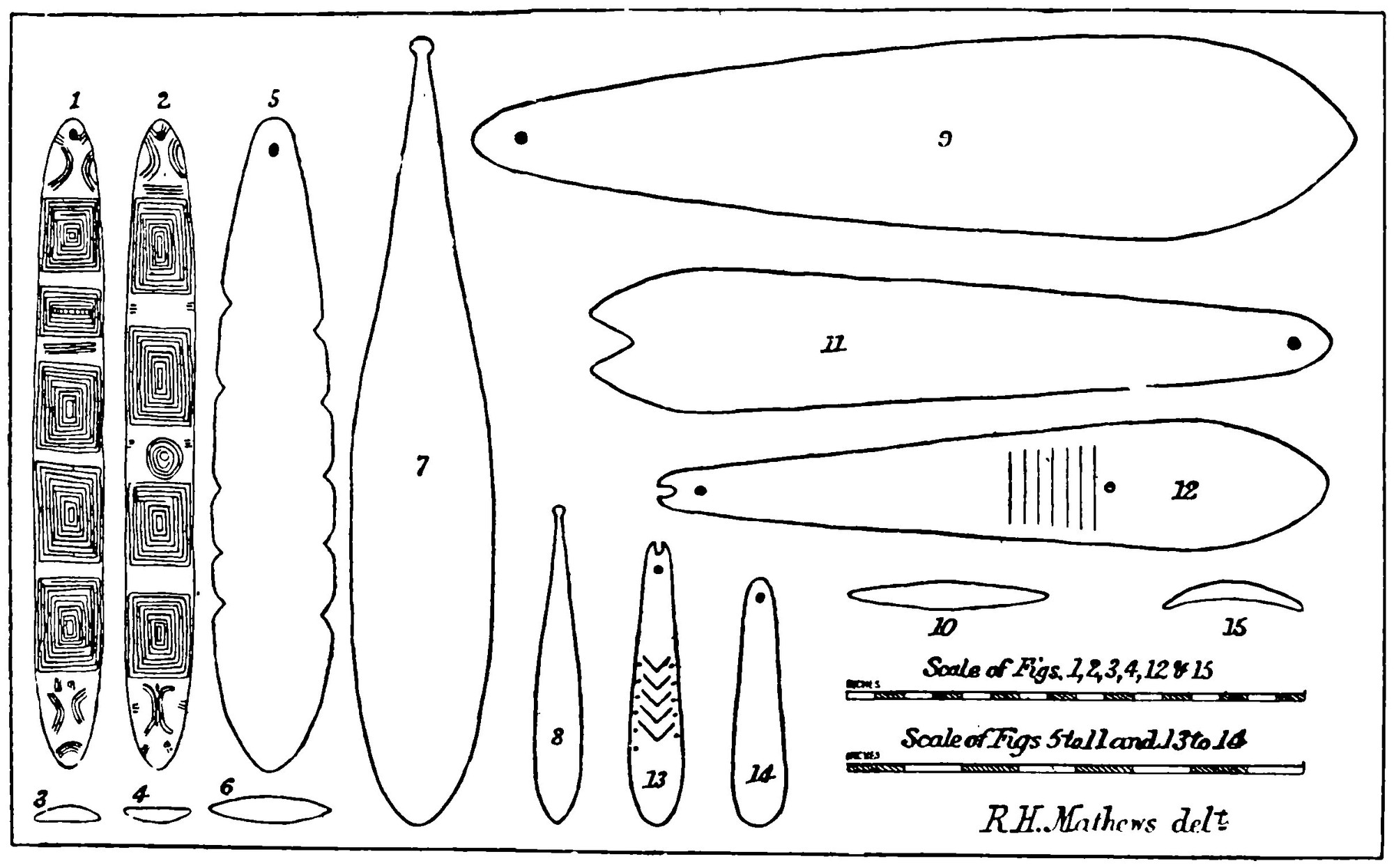
Among the Geawe-gal of the Hunter River, a wooden booming instrument was whirled at the end of a cord during initiation; a particular coo-ee and a particular reply were taught to the young men when they were made. The ceremony grounds were marked with the form of a cross moulded on the earth, a circle similarly formed, and sinuous parallel lines cut into the surrounding trees — ground the women and children were never allowed to approach. The account comes from G. W. Rusden, Howitt's informant on the tribe, who had learnt their language in his youth and who recorded the "defeat of tribal reverence" that followed when a white man put a station close to one of the secret places and it became a thoroughfare. In the neighbouring Gringai of the same valley, whose rite Rusden set down alongside it, the women lay round the great ring with their faces covered while the boy was led out, rising only to sing and dance before withdrawing to a separate camp until the ceremonies ended; the Gringai called their bull-roarer Torikotti.
In connection with the ceremonies of the Geawe-gal tribe of the Hunter River, a wooden booming instrument was whirled round at the end of a cord. It was used then, and then only.
Howitt, The Native Tribes of South-East Australia (1904), p. 569 (after G. W. Rusden)
Particulars
- Function
- Initiation voice and women-exclusion enforcement.
Source
Fison & Howitt, Kamilaroi and Kurnai (1880); Howitt 1904 p.569