MUS2026-192 - museum specimen
Capitan Grande Kumeyaay bullroarer (1908)
United States - San Diego County - Capitan Grande - North America - California
Restricted
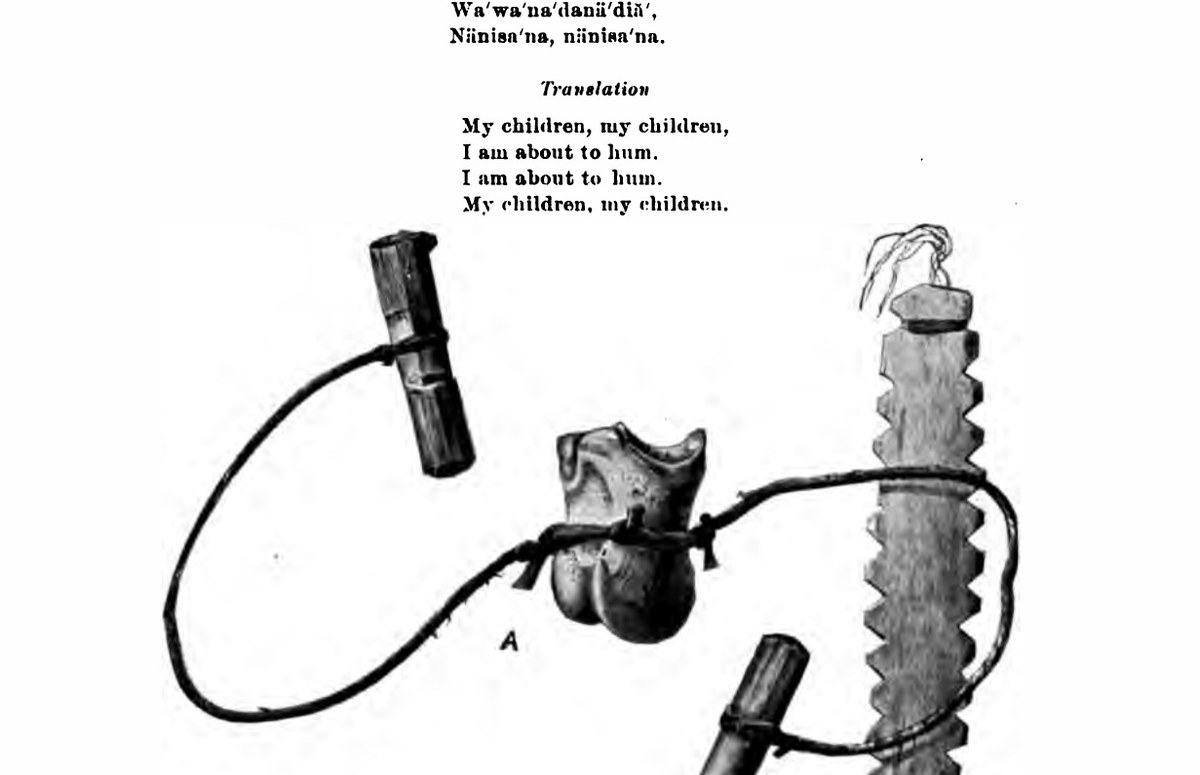
Source term: air (Diegueño, per Waterman 1910)
air — Waterman's Diegueño (Kumeyaay) name for the bull-roarer; recorded for the people generally, not from the Capitan Grande label itself.
Above the San Diego River canyon, the bullroarer of Capitan Grande did double duty. Whirled, its loud hum called the people in — Waterman's Diegueño informants said three swings of the air was the signal to assemble. Hung over the entrance of the ceremonial enclosure, it stood guard over everything inside. The museum's specimen left the village in 1908, which proved to be good timing: the El Capitan dam drowned Capitan Grande in the 1930s, and the reservoir lies over the village site today.
One of the old men swings the bull-roarer, air, three times. This is the signal for the people to assemble.
T. T. Waterman, The Religious Practices of the Diegueño Indians (1910), p. 308
- Object
- Wooden bullroarer collected at Capitan Grande in 1908; held by the Museum of Us (San Diego), no published dimensions.
- Function
- Whirled to make a loud humming sound to announce ceremonies, and hung over the entrance of the ceremonial enclosure to guard its contents (exhibit label); Waterman's Diegueño account has the bull-roarer swung three times as the signal for the people to assemble.
- Map confidence
- medium - El Capitan Reservoir site — the historic Capitan Grande village on the San Diego River, inundated when the El Capitan dam was completed in 1934.
- Source location
Page references
Exhibit label (2010 transcription); Waterman 1910 pp. 282, 308
- Forbidden to women