No. BROWN1913-002
Ngarluma (Ngaluma) banangari bullroarer
Australia · Pilbara coast between Maitland and Sherlock rivers
Sacred / spirit
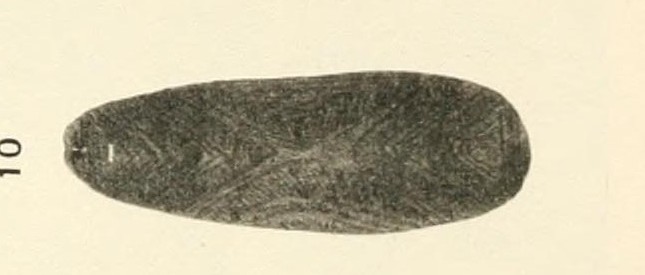
banangari
Source term: bullroarer
banangari: Ngarluma name recorded by Brown for the bullroarer; no literal lexical gloss recovered
When a Ngarluma boy came back from the journey to fetch friends from neighbouring camps for his initiation, his arms were bound with fur string, his body painted red, and eagle-hawk feathers fixed in his hair. Then he received the banangari, fastened behind his head in the headband. Women witnessed part of the ceremony; other parts were closed to them.
A bullroarer (banangari) is given to him and he wears this fastened in his head-band at the back of his head.
Brown 1913:174
Particulars
- Object
- Bullroarer worn fastened in the rear headband; no object dimensions, cord, or figure supplied.
- Function
- Given during initiation and worn behind the head. Women attended some parts of the ceremony but were excluded from other unspecified parts.