No. HASSAN1980-002
Bahdinani Kurdish badbadak bullroarer
Iraq · Bahdinan (Behdinan) · Dohuk - Amadiya, Iraqi Kurdistan · Near East · Mesopotamia
Play / practical
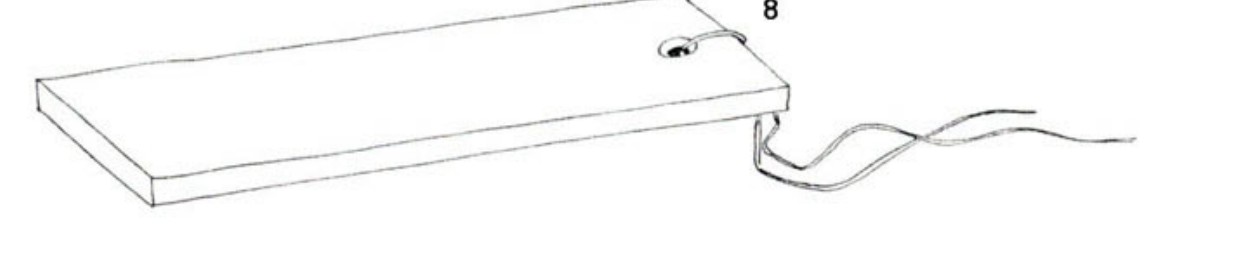
badbadak
Source term: rhombe
Bahdinani Kurdish (Kurmanji) name for the bullroarer, built on bad 'wind'; Hassan glosses it 'ventilateur'. The same formation is the ordinary Persian word for a kite.
In the mountains of Bahdinan, north of Mosul, Kurdish children call the bull-roarer badbadak — not for its noise but for what it makes: in Kurdish bad is the wind, and badbadak the little wind-thing, a name that glosses as plainly as "ventilator." The object is as plain as the name: a rectangular board drilled once at one end for its cord, whirled in steady rotation. The children make them themselves. Adults do not use them, and no magical sense attaches to them at all — the whirled blade that carries the voices of the dead across half the world is here a toy named after a draught of air.
badbadak, bad, signifie le vent, chez les Kurdes de Bahdinan
badbadak - bad means the wind - among the Kurds of Bahdinan
Hassan 1980, Les instruments de musique en Irak, printed p. 47 (section III.12, Rhombe)
Particulars
- Object
- Rectangular wooden board pierced once at one end for a cord and whirled in steady rotation; Hassan's Fig. 8 shows the rig.
- Function
- Children's toy, made by the children themselves; not used by adults and explicitly without magical connotation.
Source
Scheherazade Qassim Hassan, Les instruments de musique en Irak et leur rôle dans la société traditionnelle (Cahiers de l'Homme XXI, EHESS/Mouton, 1980), p. 47 (section III.12, Rhombe, fig. 8), pp. 96-97 and glossary p. 218