No. HASSAN1980-001
Erbil Turkmen warwara bullroarer
Iraq · Erbil Governorate · Iraqi Kurdistan · Near East · Mesopotamia
Play / practical
warwara / wighwagha / gafgafa
Source term: rhombe
warwara, wighwagha, and gafgafa are sound-imitating Erbil Turkmen names; no literal gloss is given.
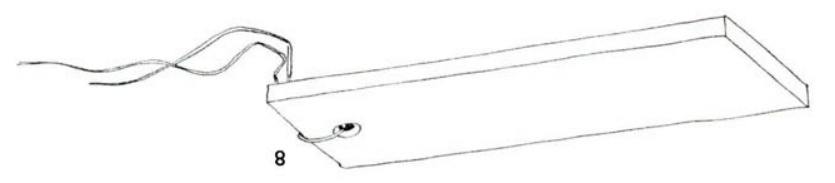
The Turkmen children of Erbil named the bullroarer after its own drone: warwara, wighwagha, gafgafa. It is a plain rectangular board, drilled once at the end for its cord, and its station is just as plain, as Scheherazade Qassim Hassan found it across Iraq in the early 1970s: children make it themselves, adults do not touch it, and no magic attaches to it.
Une planchette rectangulaire en bois ... un orifice est percé à l'une des extrémités pour permettre le passage d'une cordelette.
A rectangular wooden board ... is pierced at one end to pass a small cord.
Hassan 1980, pp. 47-48, fig. 8.
Particulars
- Object
- Rectangular wooden board with one perforation at one end for a cord; Hassan's Fig. 8 shows the whole rig.
- Function
- Children's toy, made by children; not used by adults and not invested with magic.
Source
Scheherazade Qassim Hassan, Les instruments de musique en Irak et leur rôle dans la société traditionnelle, Cahiers de l’Homme XXI (EHESS/Mouton, 1980), pp. 47-48, fig. 8; p. 96