No. CURR1887-001
Paroo-Warrego-Mungalella young-men-making bull-roarer
Australia · Upper Paroo and Warrego Rivers · Mungalella (Mungallala) Creek, south-west Queensland
Restricted
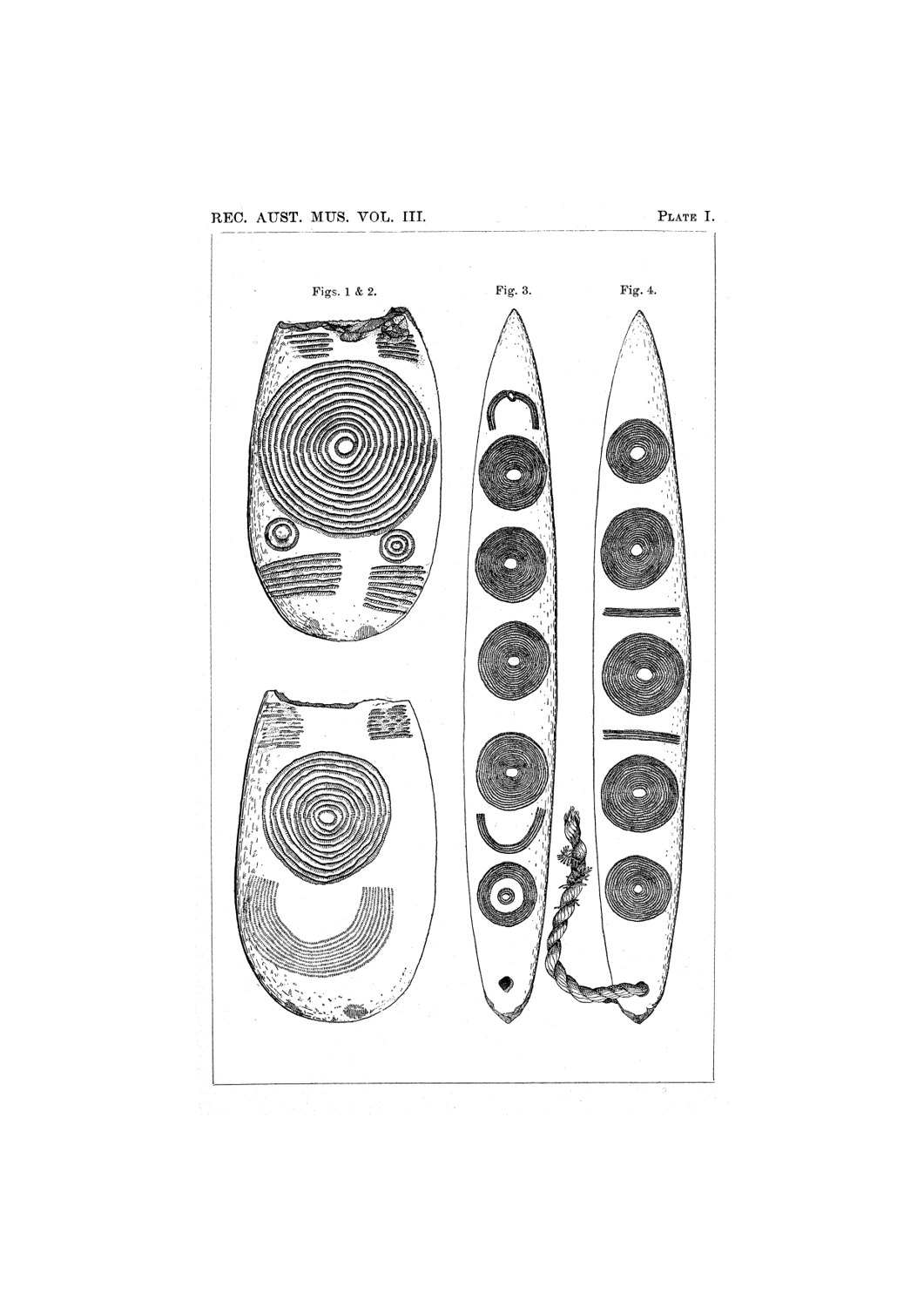
Source term: bull-roarer
“To it are ascribed mysterious qualities, and the women fly from the sound.” On the upper Paroo and Warrego Rivers and along Mungalella Creek, the bull-roarer came out when young men were made. Several distinct tribes shared this stretch of mulga and river-frontage country, their speech so alike it was almost one language; their four marriage classes — Murri, Combo, Cubbi, Ippai — were those of the Kamilaroi tribes two hundred and fifty miles to the south-east. Whatever those mysterious qualities were, the flight of the women was testimony enough.
The toy known as the 'bull-roarer' is in use amongst these tribes when making young men, as Mr. Hollingsworth informs me.
Curr, The Australian Race, vol. III (1887), no. 177, p. 274
Particulars
- Object
- Not described.
- Function
- Used when making young men; credited with mysterious qualities; the women fled from its sound.
Source
Edward M. Curr, The Australian Race, vol. III (Melbourne, 1887), no. 177 'Paroo and Warrego Rivers north of lat. 27 deg. 30 min., and Mungalella Creek' (by Looker, Conn, Playfair and Hollingsworth), pp. 270-274