No. AUSMAIN-005
Murawari (Muruwari)
Australia · Culgoa · Bokhara · Birrie · Nebine Rivers · New South Wales
Restricted
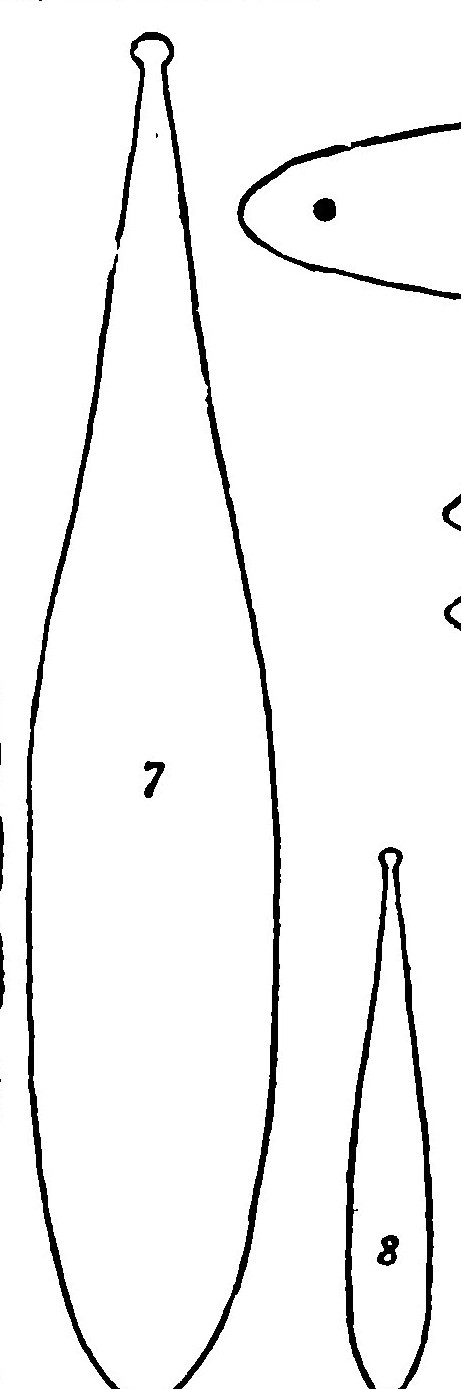
wuddoolnurran (large) / ghidjoolkumbal (small)
Culgoa River names for the two-size bull-roarer pair: wuddoolnurran the larger, ghidjoolkumbal the smaller.
On the Culgoa River, R. H. Mathews recorded that the sound of the bull-roarer was the voice of Dhurramoolan, the malevolent being supposed to preside over the initiation ceremonies; the guardians told the novices "that all the similar sounds which they have yet heard have been made in this way." The instrument came in two sizes — the larger called wuddoolnurran, the smaller ghidjoolkumbal — both swung in the same manner as the neighboring Wiradthuri tribes' mudthega and moonibear. A string was fastened over a small knob at the tapering end, Mathews wrote, "in the same way that a whip is fastened to its handle," and the form was in use over a large area, from the Macquarie to the Culgoa and probably further north. The women were made to believe the noise was Dhurramoolan himself, and the boys were warned not to reveal what they had seen to the women or the uninitiated, on pain of death.
Among the tribes on the Culgoa, the larger instrument is called wuddoolnurran, and the smaller ghidjoolkumbal, and both are used in exactly the same way as the mudthega and moonibear herein described.
R. H. Mathews, Notes on the Aborigines of New South Wales (1907), bull-roarer section (Figs. 7–8)
Particulars
- Object
- Two-class bull-roarer set used on the Culgoa River; recorded by Mathews with figures.
- Function
- Initiation: large form for senior voice, small form for the candidate phase.
Source
Mathews, Notes on the Aborigines of New South Wales (1907)