No. AUSIN-036
Toon Doon on a human-hair cord
Australia · Corner Country, far north-western New South Wales
Restricted
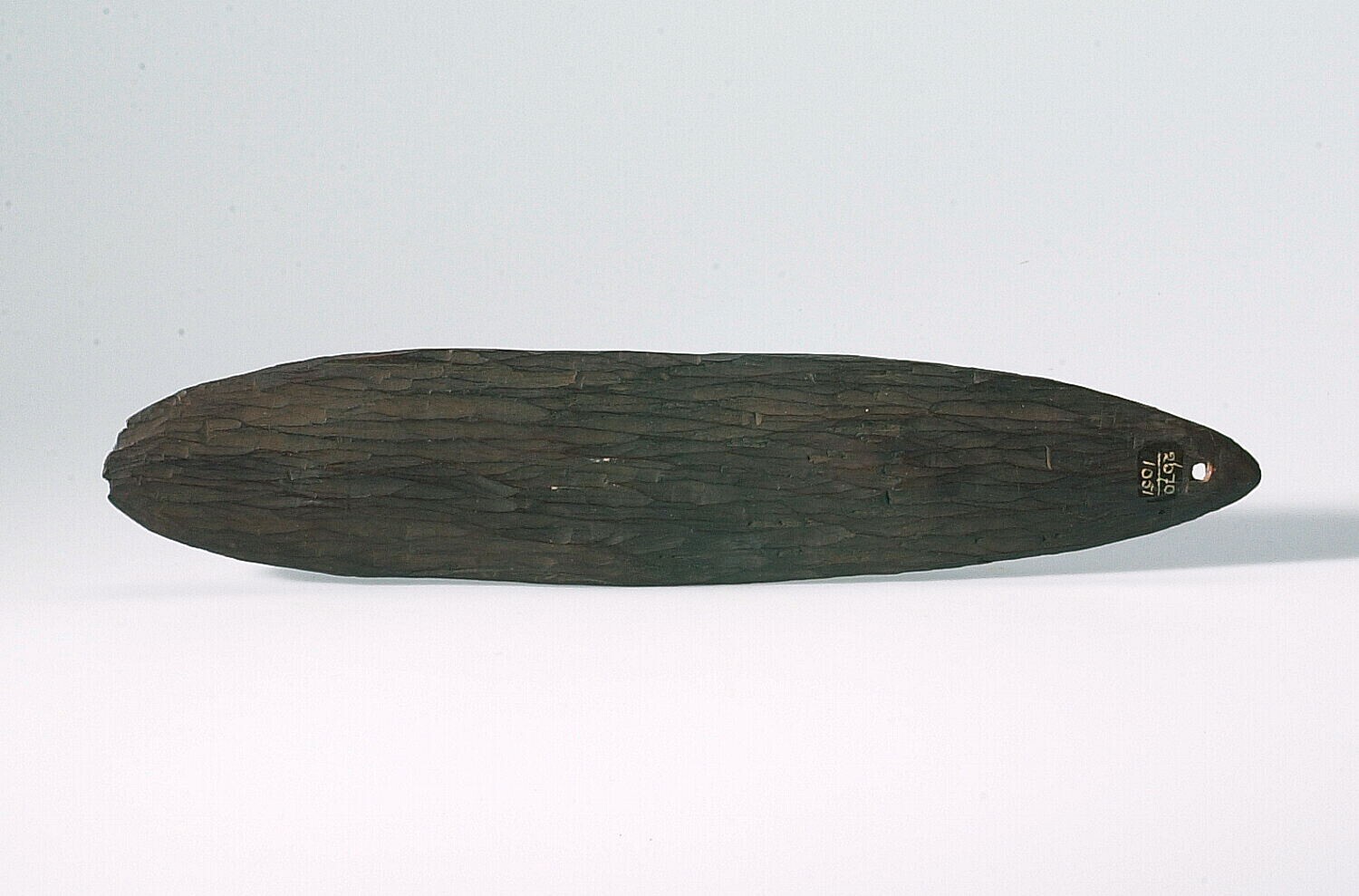
Toon Doon
Source term: TOON DOON, TUNDUN Bullroarer
Toon Doon: the name recorded with the object at Milparinka; the paired 'Tundun' is the Kurnai (Gippsland) term and its local validity is uncertain.
A stout wooden bullroarer, forty-six centimetres long, its cord spun from human hair — collected around Milparinka, the gold-rush township in the Corner Country of far north-western New South Wales, and given to the Pitt Rivers Museum in 1900. The register wrote down two names for it: Toon Doon, and Tundun. The second should raise an eyebrow. Tundun is the celebrated bullroarer name of the Kurnai of Gippsland, a thousand kilometres to the south-east — likelier a label that travelled with collectors than a second word heard on the spot — while Toon Doon is probably what was actually said in the Corner Country. Who swung it nobody wrote down; but in 2012 the museum, working with the Yolngu elder Joe Neparrnga Gumbula, determined that objects like it are men's secret-sacred things, for initiated eyes only. Milparinka lies inside the track of the Kurlawirra, the ancestor who is the main story of this corner of the country: a snake who became a man, who made the rockholes and cried out kakuru as he put a rainbow serpent into each of them, and whose one recorded instrument is a little bullroarer swung to muster water out of the holes and into his bag.
Particulars
- Object
- Wooden bullroarer, 465 × 82 mm, with a cord of human hair; given to the Pitt Rivers Museum in 1900.
- Function
- Secret/sacred men's ceremonial object: the Pitt Rivers record of this bullroarer carries the 2012 determination, made with the Yolngu elder Dr Joe Neparrnga Gumbula, that the museum's Australian bullroarers are male ceremonial objects to be seen, handled and spoken of only by initiated men of the appropriate country and clan.
Source
Pitt Rivers Museum 1900.55.275, register name 'Toon Doon, Tundun'; collected by Harry Stockdale