PNG54 - ethnographic attestation
Lae-Womba
Papua New Guinea - Morobe - Oceania - Sahul
Function not recorded
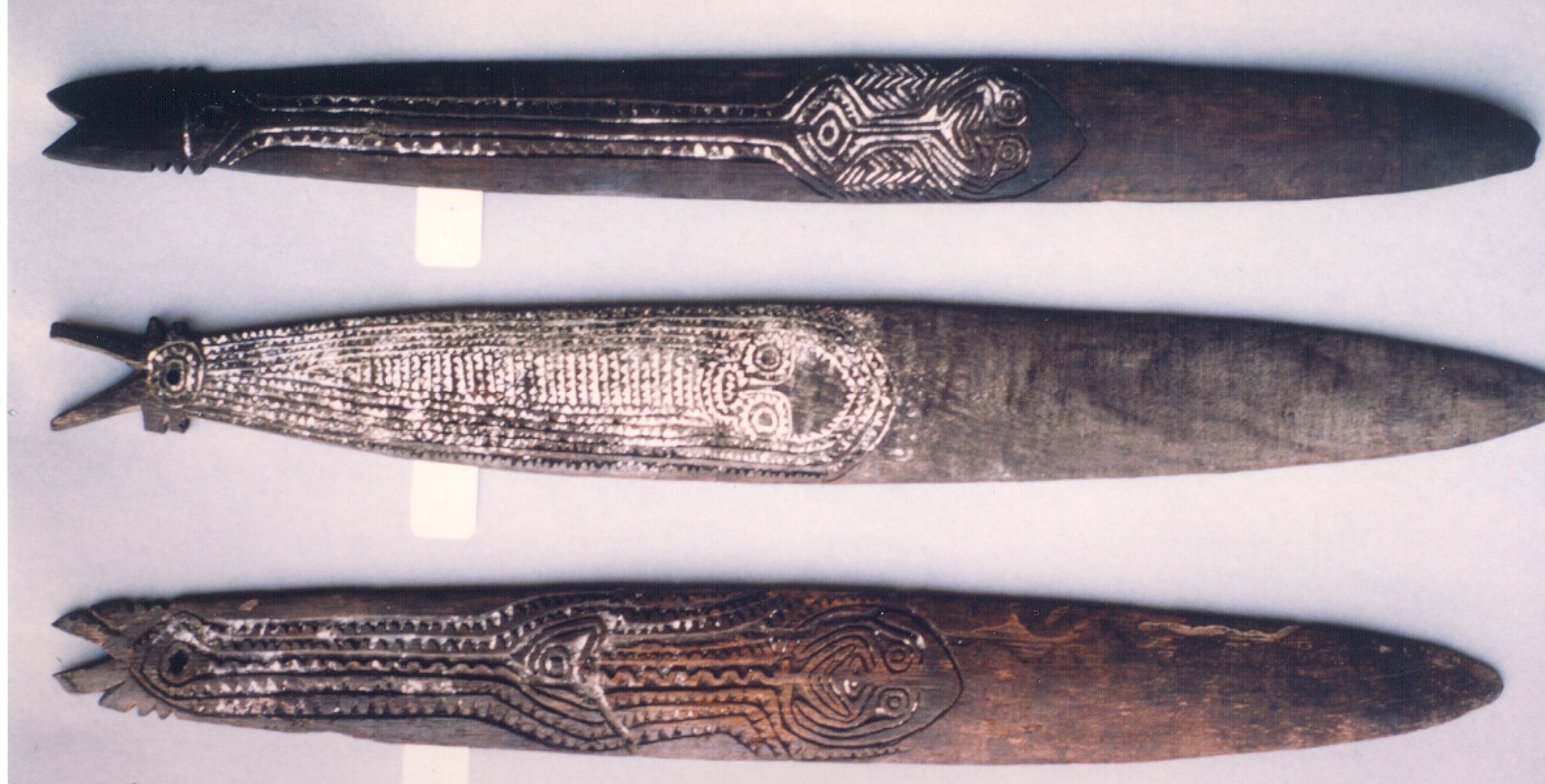
Source term: bullroarer / sacred flute / slit-gong flags
Gourlay's 1975 survey of esoteric instruments lists a bullroarer for the Lae-Womba of Morobe, but counts them among the Huon Gulf's "apparent exceptions": peoples whose sources record the object yet "give no uses within the present context." "Lae-Womba" is the colonial-coastal name, built from Lae and Wampar, that the Neuendettelsau Lutheran missionaries took to mean the Wampar of the middle Markham Valley behind Lae, who in the nineteenth century came down the Watut, drove out the earlier inhabitants, made peace in 1909, and gave up their elaborate initiation rites in the 1920s when they were baptized, before any cult could be closely recorded. The booming balum-monster cult of the Huon Gulf bullroarer belongs to the coastal Yabim and Bukawa, not to the inland Wampar, whose own ethnography describes no surviving men's cult to give this instrument a voice.
Elaborate initiation rites were given up in the 1920s, when the Wampar were baptized.
Encyclopedia of World Cultures, "Wampar" (via Encyclopedia.com)
- Object
- bullroarer occurrence
- Function
- Gourlay source-catalog row with bullroarer occurrence; function not stated.
- Map confidence
- medium - alias_geocode
- Source location
Page references
p. 15 (occurrence in Table 1, row 54)