No. SIBER-001
Even owl-speaking bullroarer North Asia
Russia · East Siberia · northern Yakutia
Sacred / spirit
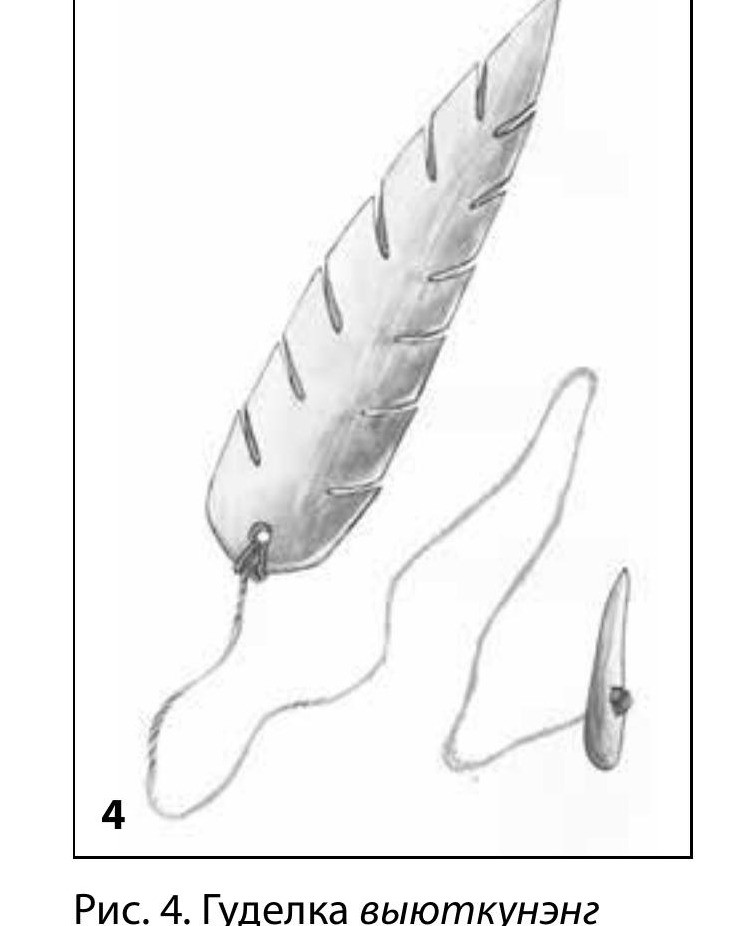
Source term: bullroarer
Among the Even of northern Yakutia, the bullroarer was heard as the voice of an owl "speaking." Players could layer in further sounds, perhaps to mimic a wood grouse. Marilyn Walker heard this from Even informants, one of them a shaman's daughter, who set the instrument inside a wider world of imitative sound: the herder's staff that whistles when thrown, the hide pouch hung with reindeer hooves, an instrument said to mimic the wind that moves the grass, which the Evenks held to be the work of spirits. Children listened to the bullroarer and had to guess whose voice it was making. Learning to recognize all these sounds of nature, and to build the instruments that reproduced them, was a child's musical education in Even families.
Traditional Even instruments included the bullroarer which is the sound of an owl "speaking." Sometimes peoples added other sounds to the basic bullroarer sound, perhaps to produce the sound of a wood grouse.
Walker 2005:168 (Shaman, Vol. 13)
Particulars
- Object
- Bullroarer described as sound of an owl speaking
- Function
- Traditional Even instrument with animal-sound symbolism
Source
Shaman: Journal of the International Society for Academic Research on Shamanism 13 (2005), p. 168