LOEB1929-042 - ethnographic attestation
Minangkabau
Indonesia - West Sumatra - Padang highlands - Southeast Asia
Sacred / spirit
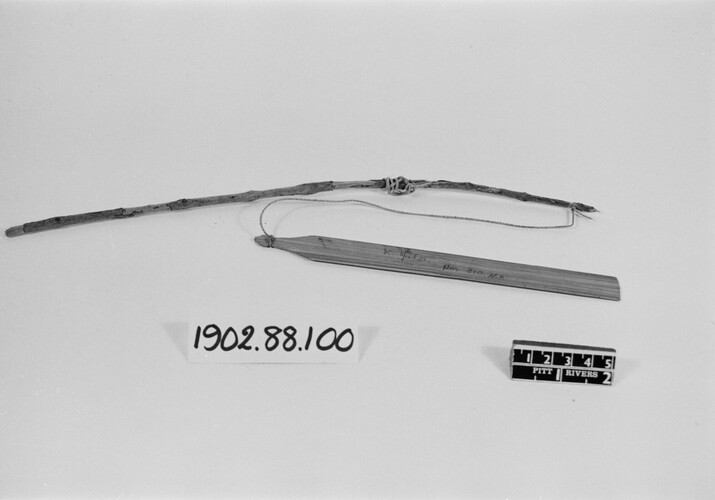
gasiang tangkurak Minangkabau (West Sumatra, Indonesia)
skull spinning-top / "skull top" (gasiang = spinning top, tangkurak = skull)
Etymology. A compound of Minangkabau gasiang "spinning top" (= standard Indonesian gasing) and tangkurak "skull" (= Indonesian tengkorak): literally a "skull top," a fragment of a dead man's forehead bone threaded with cord that is spun/whirled to buzz, used in West Sumatran love- and soul-magic. (high confidence)
Among the Minangkabau of the Padang Highlands of West Sumatra, the bull-roarer was used not in men's initiation but in magic, and was sometimes cut not from wood but from the frontal bone of a man renowned for his bravery. The animist beliefs of the Padang uplands were set down by J. L. van der Toorn, a Dutch schoolmaster who headed the teacher-training college at Fort de Kock, in an 1890 study, and his account is the source later compilers drew on for the bone instrument. The whirled bone was a magician's tool, standing apart from the secret men's rites in which bull-roarers usually figure.
Part sound-maker, part ritual device, the gasiang is a fragment of human skull scavenged from a local graveyard, preferably from the forehead of a spiritually powerful dead man. A long string made from the white fabric of a burial shroud is threaded through two holes in the bone; when these strings are pulled in the right way, the skull fragment spins like a top, buzzing audibly like a small propeller.
Palmer Keen, "Goona-Goona: Ritual Love Magic and Music in West Sumatra," Aural Archipelago (https://www.auralarchipelago.com/auralarchipelago/saluangsirompak), describing the gasiang tangkurak.
- Function
- Minangkabau magicians whirl a bullroarer made from frontal bone to induce demons to carry off a woman's soul.
- Map confidence
- medium - representative coordinate for named people, place, or region in Loeb
- Source location
- van der Toorn 1890 p. 55; Loeb 1929 p. 284 (n. 111)
- Spirit voice
- Women-linked