No. HORNE1924-001
Wangkangurru inchitcha bullroarer
Australia · Mungeranie · country east of Lake Eyre
Restricted
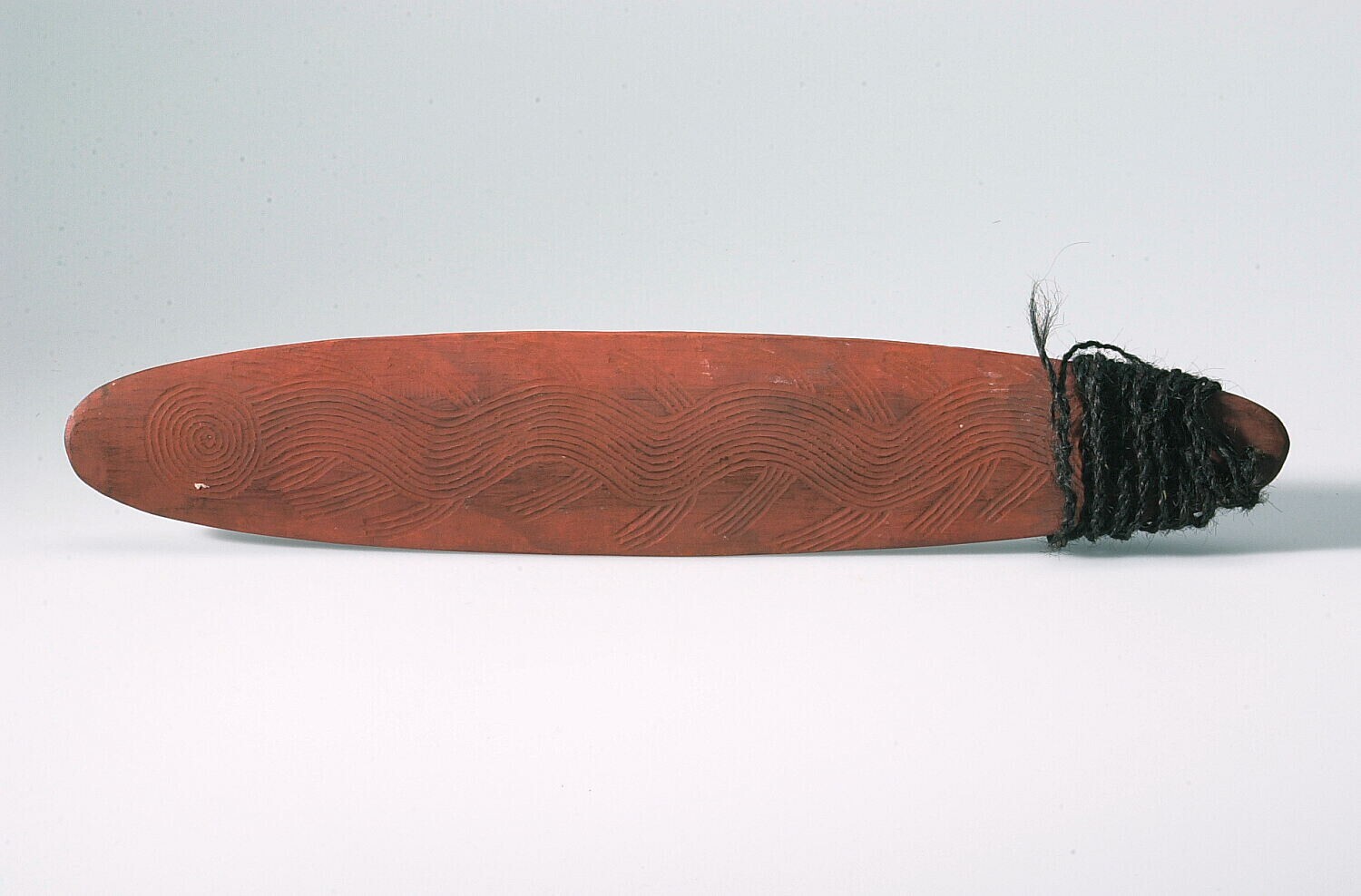
inchitcha
Source term: Churinga or bull-roarer
inchitcha: Wangkangurru (Wonkonguru) name glossed Churinga or bull-roarer
When Wangkangurru men prepared a rain-making ceremony at Mungeranie, a large inchitcha growled after a woman looked out from her shelter; a smaller one then sent every woman and child away from camp. In the Wilyaroo initiation a leader swung the same bullroarer into a circle of waiting women, thrust it under warm ashes, jerked it out and hid it at once. Horne and Aiston stated the rule plainly: women were not to see it.
The bull-roarer - not to be seen by women.
Horne and Aiston 1924:174
Particulars
- Object
- Wooden bullroarer with a drilled hole for its string; large and small forms are sounded. No dimensions or isolated object figure.
- Function
- Sounded to clear women and children from ceremonial preparation; swung and hidden during Wilyaroo initiation; forbidden for women to see.
Source
G. Horne and G. Aiston, Savage Life in Central Australia (1924), pp. 90, 112 and 174-175