No. SIB-MELODIYA-001
Siberian Eskimo eïnètkoutchin bullroarer
Russia · Chukotka · northeastern Siberia · Arctic Siberia
Play / practical
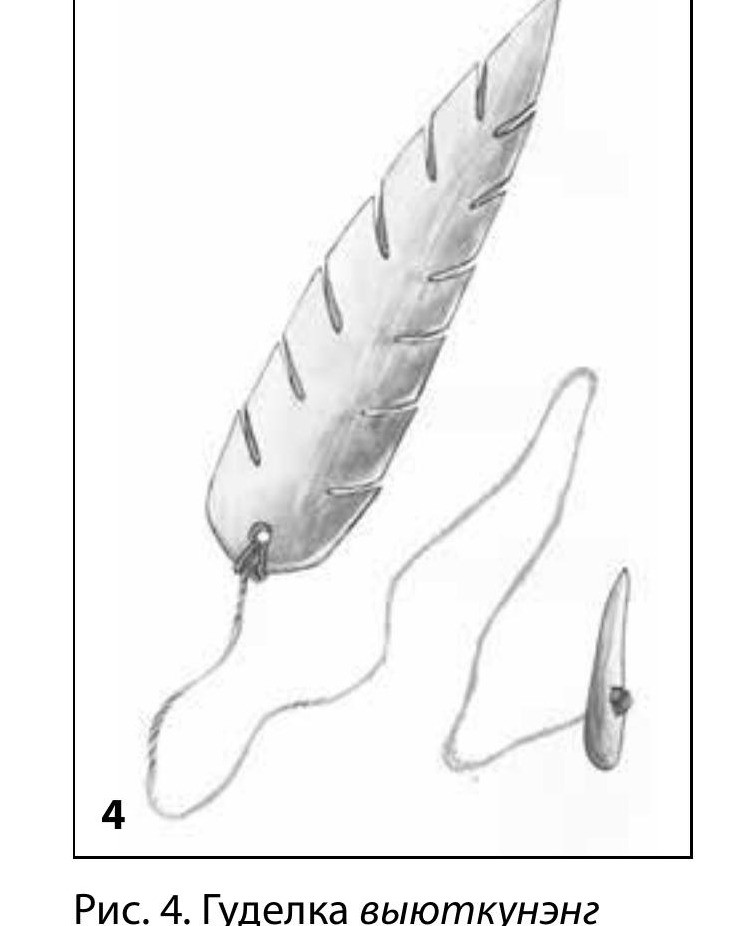
eïnètkoutchin / enietkoutchina / enietkoutchine
Source term: eïnètkoutchin / enietkoutchina
enietkoutchina (also eïnètkoutchin, enietkoutchine): the name for the spun cord-and-rod aerophone, i.e. a bullroarer
On a Soviet-era anthology of Siberian and Far North music, issued in France by Le Chant du Monde, a short Eskimo song called "Flight of a Seagull against the Wind" runs barely over a minute. The singer, credited only as Oumka, performs to the sound of an enietkoutchina, a small wooden rod whirled on a cord, which the album lists among its instruments as a bullroarer. No ritual use is recorded, only that it accompanies the song, and the place the recording was made is not given.
Oumka, voice and enietkoutchina.
National Museum of Ethnology (Minpaku) track record P21829B12, "Flight of a Seagull against the Wind"
Particulars
- Object
- The eïnètkoutchin: a small wooden rod with a cord attached, spun quickly in the air to produce a sound of changing pitch; on the recording it sounds with voice in an Eskimo song.
Sources
- Le Chant du Monde / Melodiya, Voyage en URSS no. 10: Siberie, Extreme Orient & Nord, side II, “Flight of a Seagull against the Wind,” original insert, via MusicRepublic scan View · archived
- National Museum of Ethnology (Minpaku), track P21829B12, “Flight of a Seagull against the Wind” View · archived
- edmu, Voyage en URSS, liner-note transcription and instrument dictionary View · archived
- ArsX, YouTube excerpt, 03:47 View · archived